Most of us are not consciously aware of how the body moves, how we carry ourselves through space, or how we load our body during daily activities.
For most people, this is not something they need to think about—until the first injury occurs, or unexplained tightness, stiffness, or a persistent ache begins to interfere with daily life.
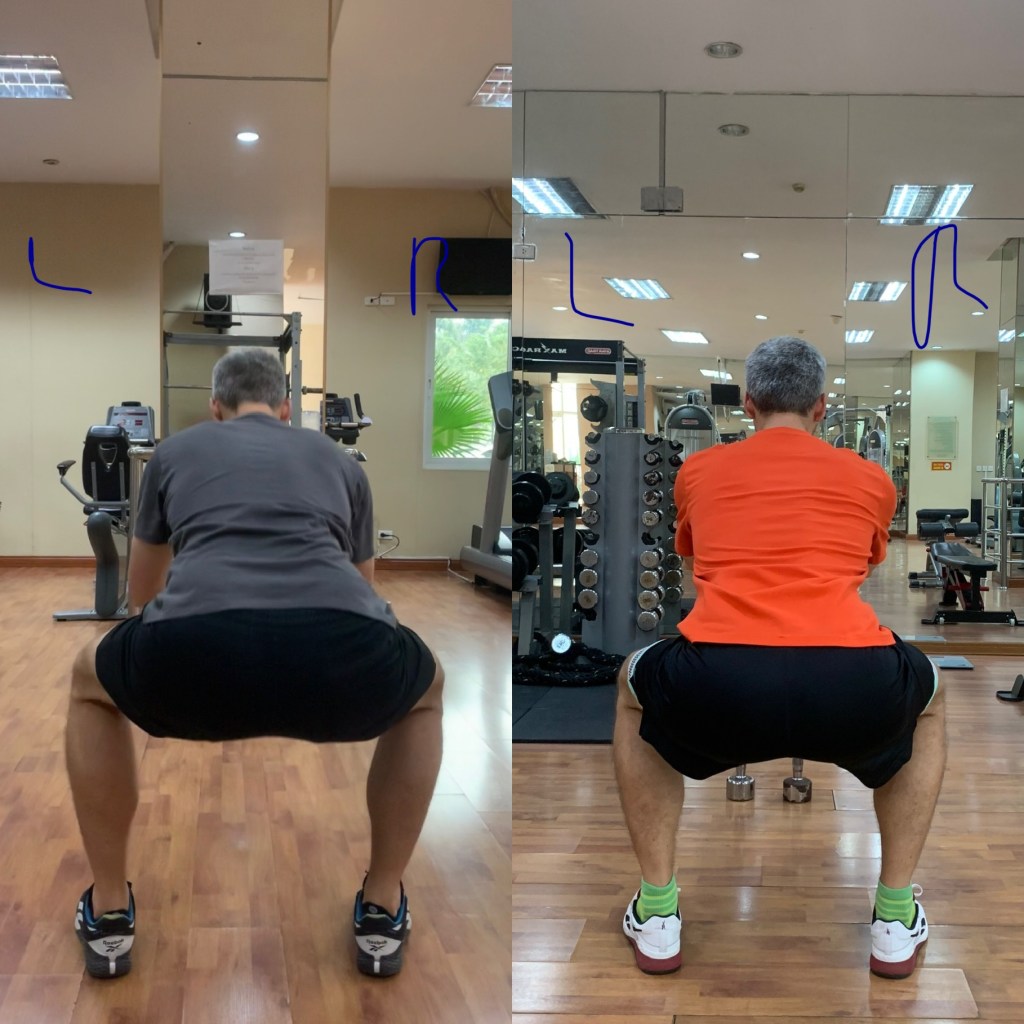
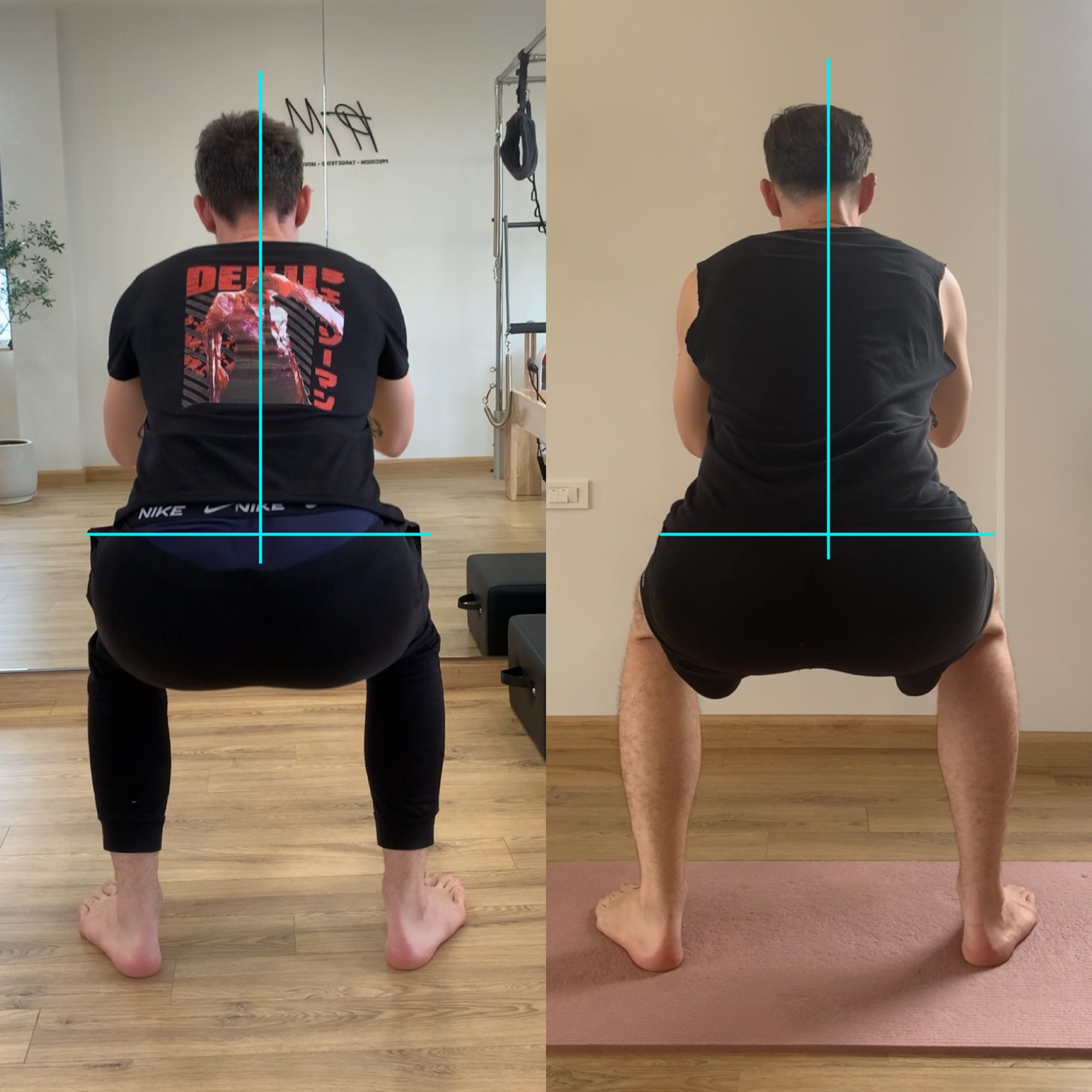
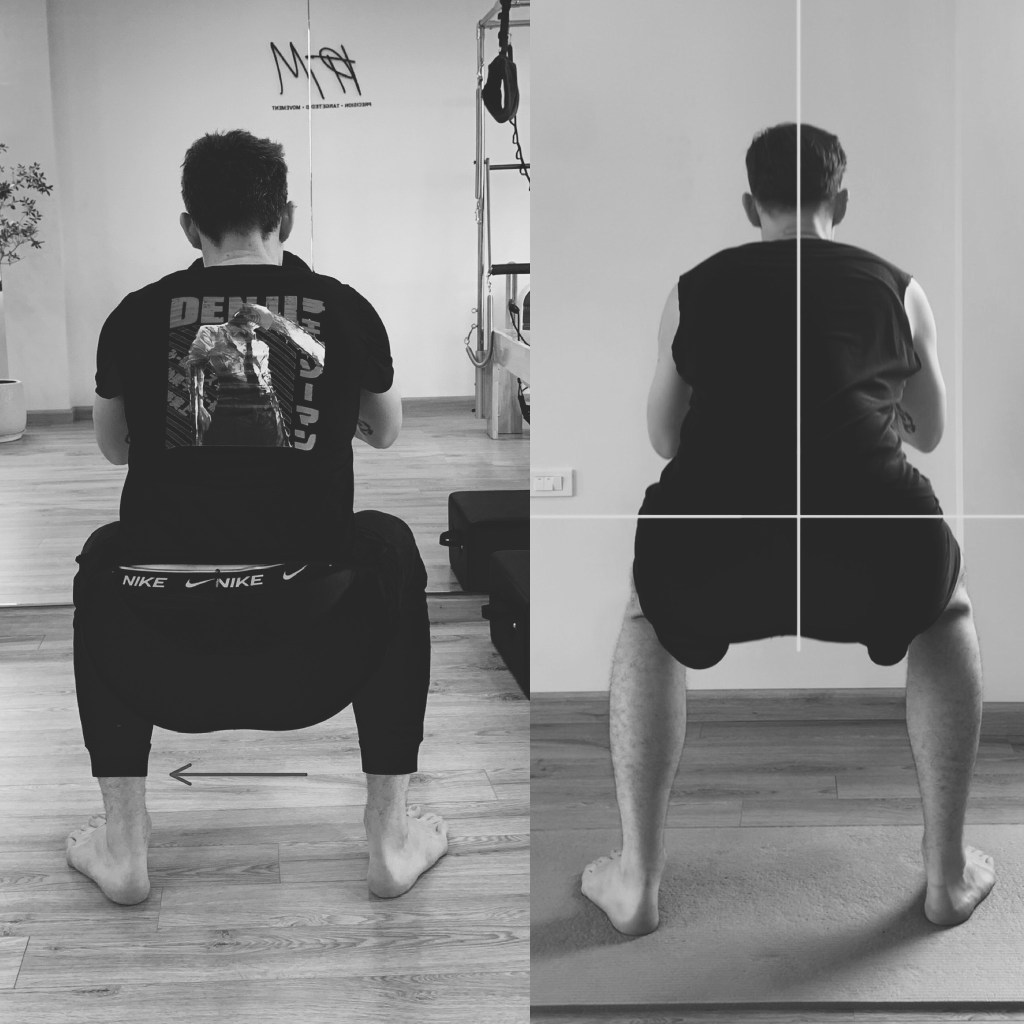
The images here are a collection of squatting patterns I have observed over the years. They demonstrate how differently the body can organise the same movement task. Variations in ankle, knee, hip, pelvic, and trunk mechanics can influence how load is distributed throughout the kinetic chain.
We often want to identify one exact moment when the pain started:
“I hurt myself getting out of bed.”
“It happened when I stood up from the chair.”
“It started when I reached overhead.”
“It was because of that fitness class.”
In a clear traumatic or contact injury, the relationship between the event and the injury may be relatively direct. However, many musculoskeletal pain presentations develop through a combination of factors rather than a single movement or isolated incident. Repeated loading, physical capacity, previous injury, physical activity, recovery, and individual factors may all contribute to the development and persistence of symptoms.
An umbrella review by Dunn et al. (2024), incorporating 13 systematic reviews and 185 original studies involving almost 490,000 participants, further supports the multifactorial nature of musculoskeletal pain, demonstrating associations across biological, psychological, and social factors rather than a single mechanical cause.
At the same time, repetitive mechanical loading cannot simply be dismissed. A systematic review examining muscle, tendon, and bone injuries found evidence that repeated submaximal loading may contribute to the accumulation of tissue-level damage and fatigue, particularly when exposure exceeds the capacity for adequate recovery and adaptation.
This is why helping someone move better begins with understanding how they currently move, what demands they are exposed to, and whether their physical capacity is sufficient for those demands.
Movement is a capacity that can be developed
The goal is not to make everyone move in exactly the same way.
Human anatomy varies. Movement strategies vary. The demands of a task vary.
Instead, we want to develop sufficient strength, mobility, coordination, stability, and load tolerance to allow an individual to perform the movements required by daily life, exercise, or sport.
This is particularly important because the body adapts to mechanical loading.
Tendons, for example, respond to progressive mechanical loading with measurable changes in their structural and mechanical properties. A systematic review and meta-analysis of 61 studies found that mechanical loading increased tendon stiffness and elastic modulus, with resistance training producing significant adaptations in tendon material properties.
Earlier evidence has similarly demonstrated improvements in tendon stiffness, Young’s modulus, and cross-sectional area following chronic exercise, with the magnitude of loading influencing the adaptive response.
The principle is therefore not simply “avoid stress on the body.”
It is to provide an appropriate amount of mechanical stress and progressively increase the demand as capacity improves.
The objective is to create a balance between loading and recovery: enough stimulus to encourage adaptation, without repeatedly exceeding the individual’s current capacity.
The importance of not doing too little
The same principle applies in the opposite direction.
Physical inactivity and prolonged periods of insufficient loading can reduce physical capacity. The body adapts to the demands placed upon it, but it also adapts to the absence of those demands.
A recent systematic review and meta-regression examining muscle disuse found reductions in muscle strength, muscle mass, and cardiovascular fitness following periods of reduced activity or immobilisation.
This is why physical activity and strength training should not be considered interchangeable.
Walking, standing, household chores, and other daily activities are important for maintaining general physical activity and reducing sedentary behaviour. However, they do not necessarily provide sufficient progressive overload to develop strength or other specific physical capacities.
Someone may therefore be active throughout the day but still lack the strength or load tolerance required for lifting, running, jumping, resistance training, or sport.
The solution is not simply to do more of everything.
It is to identify what the individual needs to tolerate and what capacity is currently missing.
Why corrective exercise needs to be individualised
This is where individualised corrective exercise becomes relevant.
There is no single exercise, posture, or movement pattern that is universally appropriate for everyone.
Two people may perform the same squat and arrive at the same endpoint through very different strategies. One may require greater mobility; another may require greater strength or control. One may tolerate a particular loading strategy well, while another may repeatedly experience excessive stress in the same region.