Background
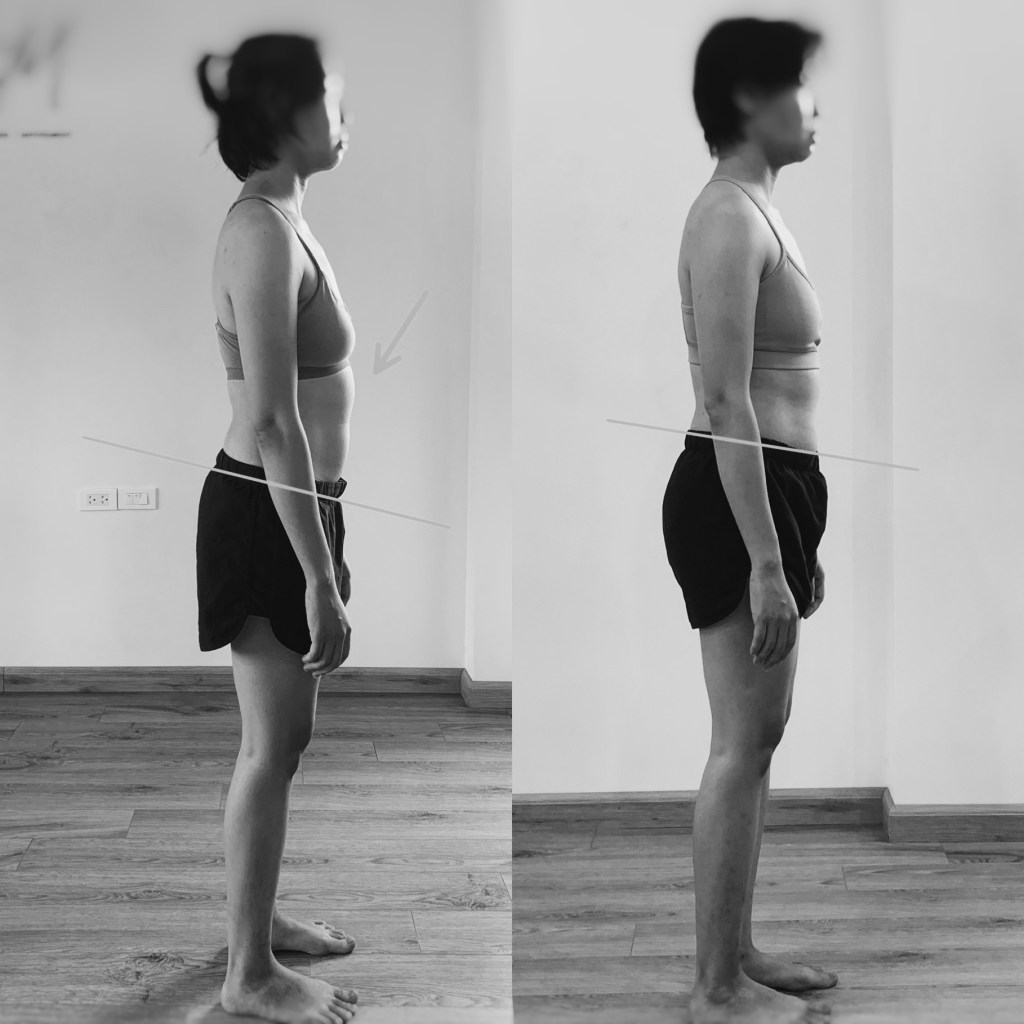
The client is a woman in her 30s, employed as a teacher. She had given birth several years earlier and subsequently returned to strength training, including deadlifts exceeding 50 kg. She also reported intermittent participation in yoga and Pilates during the postpartum period, together with moderate home-based exercise.
Presenting problem
She presented with lower back and pelvic pain, with radiating symptoms to the lateral thigh. She also reported a dull ache in the pelvic and sacral region, neck pain, and recurrent lightheadedness when moving from a supine to an upright position. She had previously sought medical evaluation for possible cervical instability. Self-assessment using the Beighton score suggested generalized joint hypermobility.
Investigations and key findings
Bilateral hip MRI demonstrated benign-appearing sclerotic foci involving the right ischial tuberosity, the right iliac wing adjacent to the sacroiliac joint, and the inferior aspect of the right femoral neck.
Lumbar spine MRI revealed degenerative disc disease at T11/12 and an intraosseous disc herniation (Schmorl’s node) at T11/12 extending into the superior endplate of T12.
Cerebral blood-flow measurement showed reduced cerebral blood flow in the left vertebrobasilar arterial system.
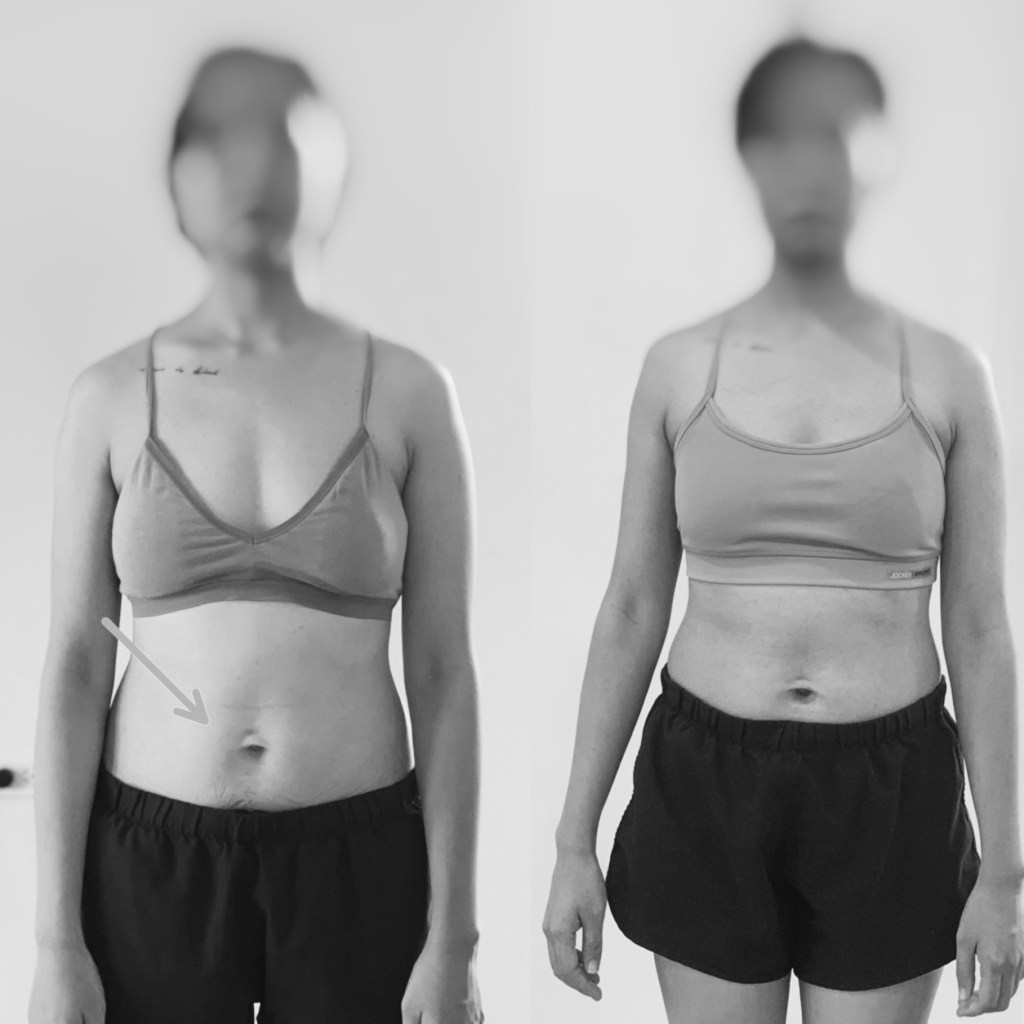
Movement assessment identified pelvic asymmetry, core weakness, instability, lower back pain, knee locking, and diastasis recti following pregnancy. Additional findings included scapular dyskinesis, weakness of the neck and shoulder musculature, impaired coordination, muscular imbalance, and dysfunctional breathing mechanics.
Intervention
The corrective exercise programme was designed to address muscle imbalance, improve functional breathing, and restore activation of the deep core, diaphragm, and pelvic floor musculature. Balance training was also included to improve postural control and movement stability.
Outcome
After five to seven initial sessions, together with regular home exercise practice, the client reported reduced pain and improved endurance. General strength also increased. She was advised to continue the home programme and maintain follow-up visits as needed.
Interpretation
This case may illustrate the potential contribution of generalized joint hypermobility to postpartum pain and movement dysfunction. It also suggests a possible interaction between core instability, pelvic control deficits, dysfunctional breathing mechanics, and postural symptoms, although the relationship with cerebral blood-flow findings remains unclear. Further research is needed to clarify the relationship between generalized hypermobility, Ehlers-Danlos syndrome, and lower back pain.
References
Generalized joint hypermobility and pelvic girdle pain
- PubMed search link: https://pubmed.ncbi.nlm.nih.gov/?term=generalized+joint+hypermobility+pelvic+girdle+pain+postpartum
Generalized joint hypermobility and low back pain
- PubMed search link: https://pubmed.ncbi.nlm.nih.gov/?term=generalized+joint+hypermobility+low+back+pain
Hypermobility and orthostatic symptoms
 Mulberry Whale PTM & Corrective Exercise