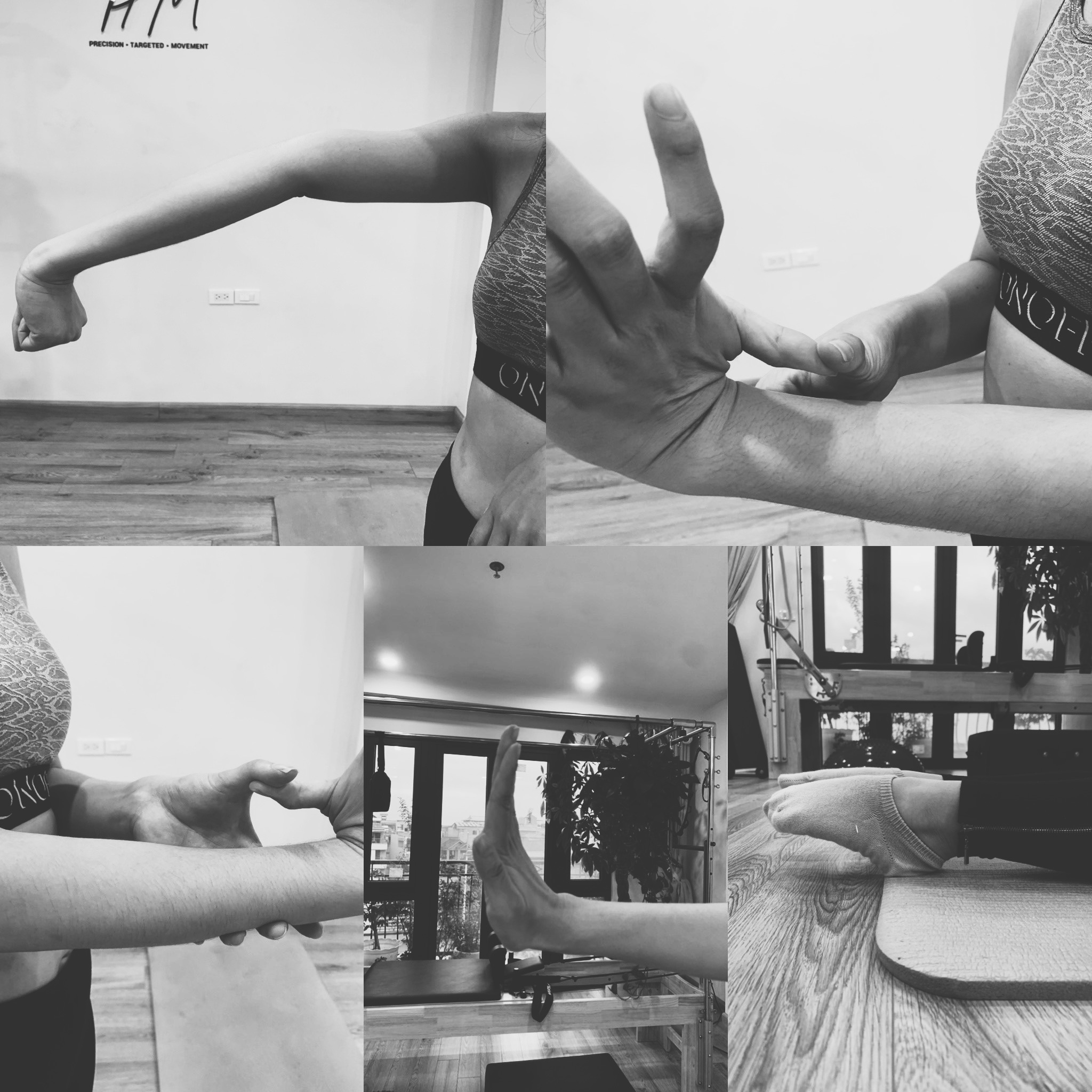
Not much is known about how far hypermobility reaches in the body. Lots of us have done it: googled it, looked at the pictures, read a little, and decided “my joints aren’t that bendy, so I must not have it.” My clients do this too.
But what loose connective tissue (ligaments and so on) does to the body goes way beyond what a quick search shows. Pain can be more disabling than your Beighton score, and hypermobility isn’t always painful [1]. This is where personal experience and practical training skills really count. After years of explaining symptoms, and wasted trips to hospital because nothing was “wrong”, that’s when you find out you’re not alone.
There is still study needed to clarify how hypermobility relates to the other symptoms that come with it, including but not limited to the ones below. Until the research catches up, a lot of people are told nothing is wrong.
I see the same story over and over with my clients. A disc bulge. Ligaments between the spinal bones that are inflamed and painful. Neck and shoulders that are tight all the time. Dizziness when they change position (could be POTS). Painful periods, gastric issues and IBS, a weak pelvic floor. Not everyone has all of it, but the cluster keeps turning up, and most of them have no idea it could be linked to generalised hypermobility spectrum disorder (G-HSD).
I’m not a doctor, and none of this proves anything on its own. But some of it does overlap with hypermobility. Gastroenterologists are now being advised to screen for hypermobility in people with gut-brain issues [2], and physio guidelines say to assess for POTS when someone gets dizzy on standing [3]. (Painful periods I only know from experience. I couldn’t find a good source, so I’m not citing one.)
I’ve been through a lot of this myself, which honestly makes me angrier, and helps me understand how frustrated these clients are.
Test you can try at home
Beighton score. The Ehlers-Danlos Society explains it with pictures here: https://www.ehlers-danlos.com/assessing-joint-hypermobility/
It’s 9 points: little fingers, thumbs, elbows, knees and bending forward with palms flat on the floor. A positive score is 5 or more out of 9 for adults (6 for children before puberty, 4 for over 50s) [1].
One thing to know about the floor part: lots of hypermobile people tighten their muscles to protect their loose joints, so they can’t touch the floor anymore. That means a low score can be misleading, and one movement shouldn’t decide it.
Please remember this is only a screening tool. A low score doesn’t rule you out, and only a clinician can diagnose. For hEDS the criteria are stricter than for HSD [4].
Things to read
- Ehlers-Danlos Society, Assessing Joint Hypermobility [1]
- Russek’s HSD/hEDS overview [4] and her PT checklist [3]
- Rombaut, Role of physical and occupational therapies in EDS and HSD [5]
Best advice for people with G-HSD or Ehlers-Danlos
- Get stronger, slowly. Hypermobile people can build strength, they just start from a lower level. Start slow, mix up your exercises, and only move up when you’re coping with where you are now [5].
- Low impact, controlled. Swimming-type exercise, Pilates and Tai Chi are often recommended [4].
- Pace yourself. Build up very gradually so you don’t end up in boom and bust, doing loads on a good day and crashing after [3].
- If you get dizzy standing up, POTS self-management includes fluids, salt/electrolytes, positioning, compression stockings and exercise [3]. When exercising, lying down comes before upright, and legs come first [4].
- Don’t forget pelvic floor and gut. Biofeedback and exercise are listed for incontinence, and education, aerobic exercise and biofeedback for gut slowness [3]. A pelvic health physio can look at what’s going on.
- Find someone who understands hypermobility. Standard physio can make things worse. People tend to do better with gentle hands-on work, pacing and slow, personalised rehab [2]. The Society has a directory: https://www.ehlers-danlos.com/healthcare-professionals-directory/
- Pain isn’t just “loose joints”. Pacing, stress management, relaxation, TENS, braces and splints can all help [4].
Red flags
I don’t want to scare everyone into rushing to hospital every time something feels off. Hypermobile EDS probably carries a lower risk of life-threatening problems than other types [6]. But get checked promptly if there’s:
- a family history of vascular EDS, or of unexplained aneurysms or artery tears [6]
- an unexplained bowel or internal organ rupture [6]
- very thin, see-through skin where you can see the veins [6]
- frequent dislocations or partial dislocations
- fainting, seizure-like episodes, or sudden thinking or vision changes, which can be a sign of neck instability [7]. Lying-down scans often can’t rule it out [7].
- bladder or bowel changes, numbness around the saddle area, or sexual dysfunction. That’s cauda equina warning signs and it’s an emergency for anyone [8].
Things to avoid
Just general guidance, so check with someone who knows your body.
- Going to the end of your range while holding a load, and going too far in range generally [5]
- Pushing into big stretches just because you can. Experts don’t all agree on stretching for hypermobile people, so ask someone who knows hypermobility before you start.
Educational only, not medical advice. If you’re worried, please see a qualified professional.
References
- Ehlers-Danlos Society, Assessing Joint Hypermobility. https://www.ehlers-danlos.com/assessing-joint-hypermobility/
- HealthEd, Managing pain in hypermobile patients. https://www.healthed.com.au/?p=2123848
- Russek, PT checklist for EDS. https://webspace.clarkson.edu/%7Elrussek/docs/hypermobility/PT_EDS_checklist.pdf
- Russek, HSD and hEDS overview. https://webspace.clarkson.edu/%7Elrussek/docs/hypermobility/RussekHSDoverview.pdf
- Rombaut, Role of physical and occupational therapies in EDS and HSD. https://www.ehlers-danlos.com/wp-content/uploads/2022/10/PDF_pain_management_lies_rombaut.pdf
- HealthEd, EDS red flags for GPs. https://www.healthed.com.au/clinical_articles/ehlers-danlos-syndrome-red-flags-for-gps/
- Russek, Surgery and HSD. https://webspace.clarkson.edu/%7Elrussek/docs/hypermobility/SurgeryHSD.pdf
- Elorreaga, HDCT Red Flags. https://hypermobilityphysio.pages.dev/blogs/hdct-red-flags