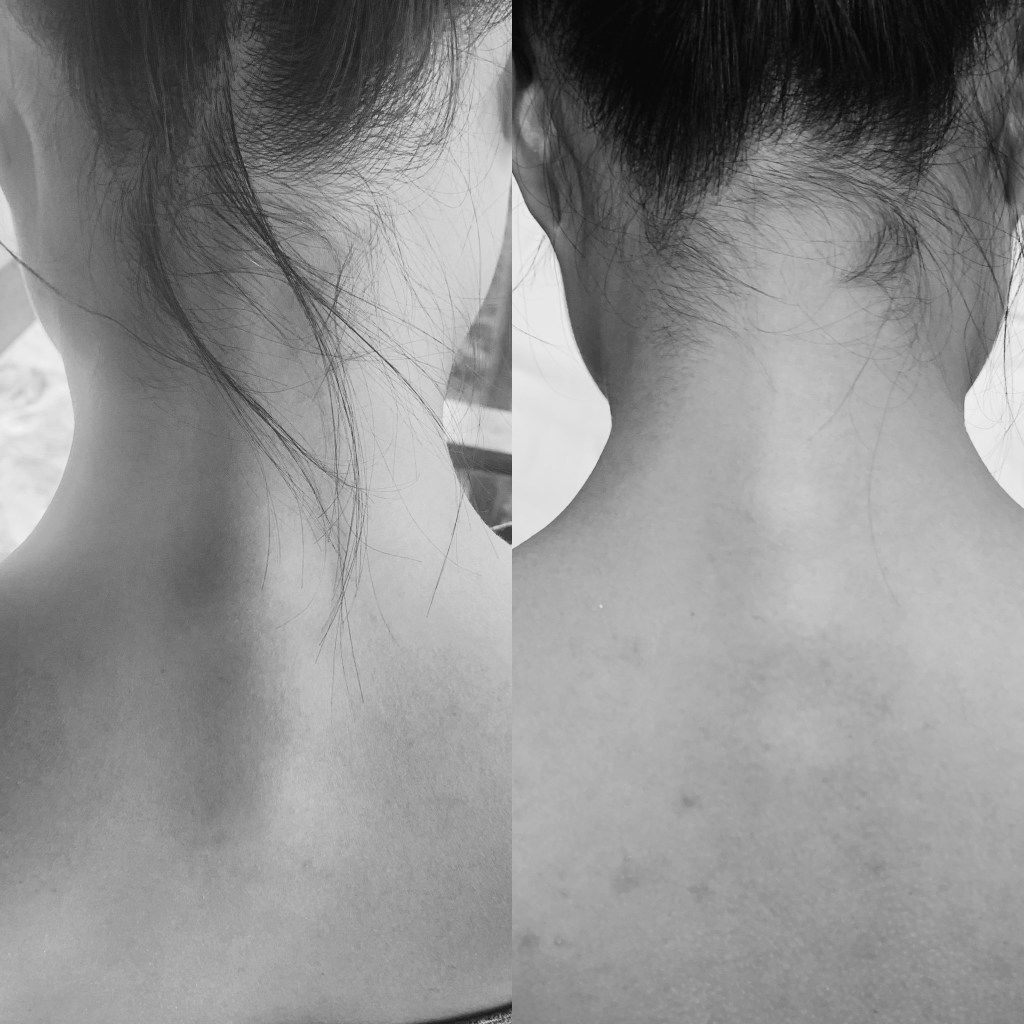
A 26-year-old golf enthusiast developed progressive neck pain after two years of regular practice, averaging up to 200 swings per session with minimal warm-up. The repetitive, high-intensity swing pattern placed continuous rotational stress on the cervical, thoracic, and shoulder regions.
The discomfort began as mild stiffness in the left shoulder and upper back following practice. Over time, repetitive trunk rotation and asymmetrical loading led to scapular instability and altered cervical mechanics. Early signs included local soreness around the upper trapezius and posterior shoulder, which gradually progressed to reduced cervical mobility, fatigue, and tension extending into the interscapular area.
Muscle imbalances developed between the upper and lower trapezius, levator scapulae, and serratus anterior. The pectoralis major and minor became tight, pulling the shoulders forward and increasing thoracic rigidity. As thoracic rotation diminished, the neck began compensating with excessive motion at the cervicothoracic junction. This resulted in a left lateral deviation of the cervical spine, visible in posture and mirrored by unequal muscle tone between the two sides of the neck.
Symptoms progressed to constant neck pain, headaches, and occasional arm heaviness after long sessions. The overactive left upper trapezius and levator scapulae elevated the shoulder girdle, while inhibition of deep neck flexors and lower stabilizers disrupted alignment further.
Assessment revealed a structural deviation at the thoracocervical junction toward the left, consistent with asymmetrical muscular recruitment and segmental stiffness.
A corrective movement program was introduced focusing on restoring thoracic mobility, reactivating scapular stabilizers, and retraining deep cervical flexors. Progressive alignment retraining and mobility restoration resulted in visible correction of the left deviation and reestablished postural balance.
Postural Comparison
Before (Left Image):
- Noticeable left deviation of the cervical spine
- Left upper trapezius elevated and shortened
- Spinous processes shifted left of the midline
- Uneven tone at the thoracocervical base and scapular stabilizers
After (Right Image):
- Cervical alignment restored toward midline
- Symmetrical upper trapezius and shoulder base
- Improved segmental control through the deep neck and thoracic stabilizers
- Balanced tone between both sides of the neck
Outcome
Through consistent movement retraining, alignment correction, and muscular re-education, the individual achieved full cervical mobility and long-term relief from neck pain. This result highlights the significance of postural awareness and targeted exercise in managing repetitive rotational strain and preventing chronic dysfunction in rotational sports like golf.

 Mulberry Whale