
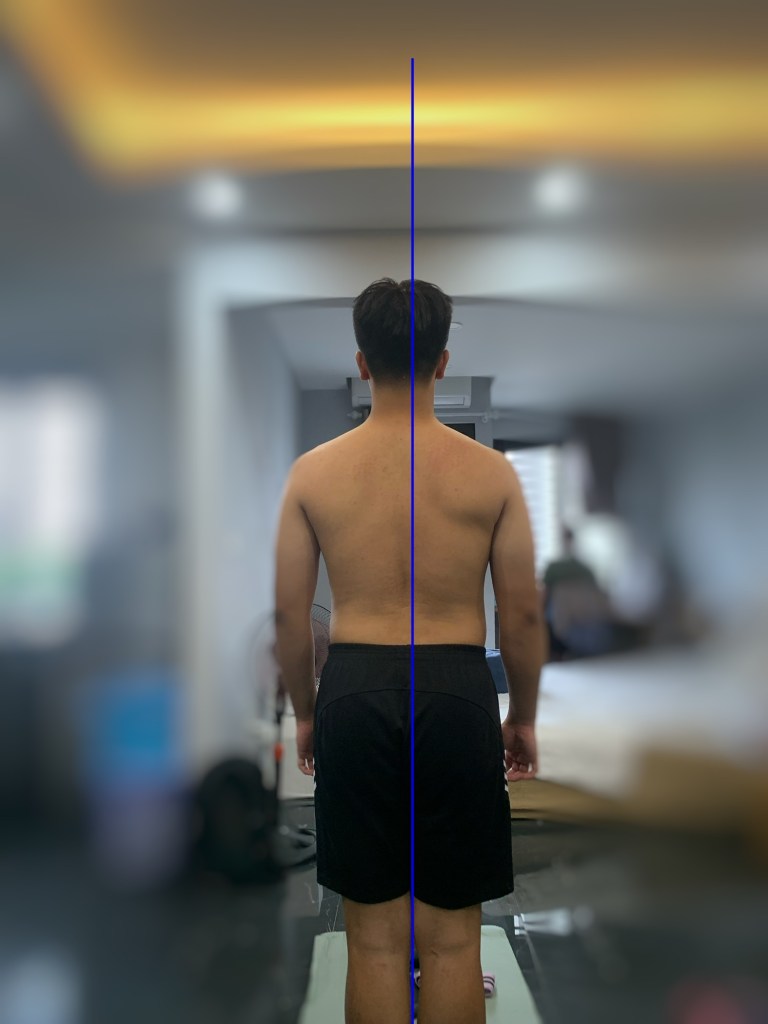
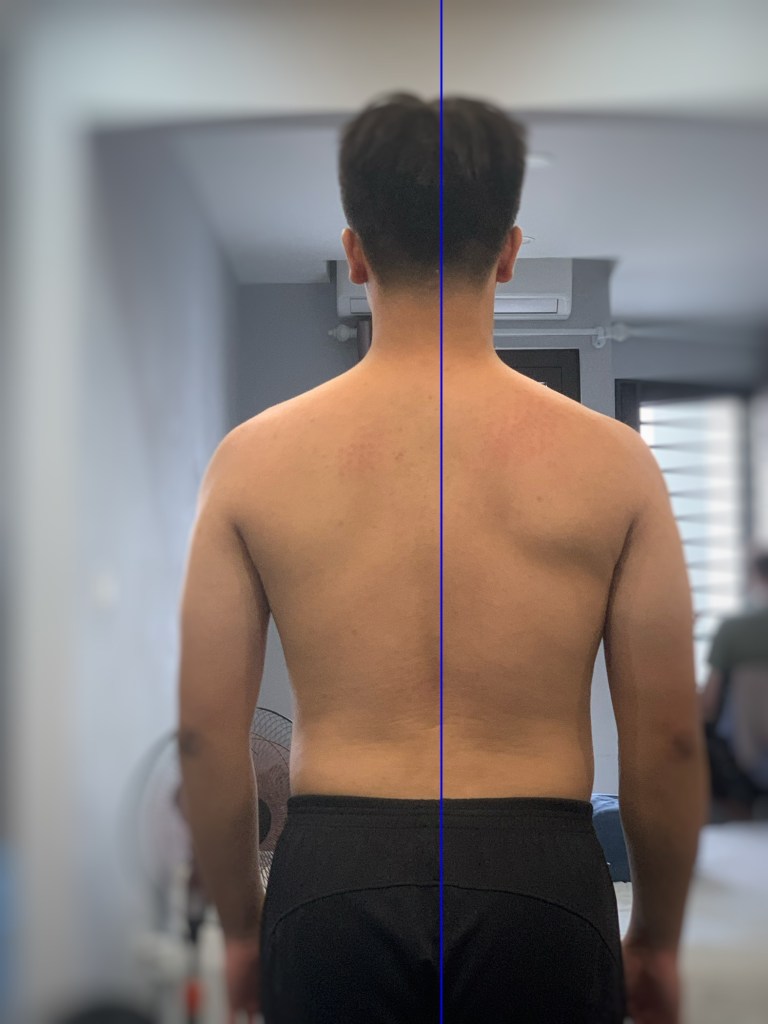
An 18-year-old martial arts practitioner came in for a complimentary check. At first sight he looked like the picture of health: strong build, high muscle mass, and no major history of injury. Yet he reported ongoing tightness in his neck and shoulders, and a recent consultation had already identified that his neck was not in ideal alignment.
This raised an important point. Even in young athletes with excellent conditioning, imbalances can still develop. High strength and muscle mass may compensate for a time, but eventually the body shows signs of strain.
My approach in this case would be to begin by releasing areas of excessive tension so that movement becomes less restricted. From there, restoring mobility through controlled exercises allows the neck, shoulders, and thoracic spine to move more freely. Stability work follows, focusing on building support through the deep muscles that protect and guide alignment. Alongside this, education plays a central role: posture awareness, recovery habits, and improved proprioception so the athlete can sense when his body is drifting out of balance.
What stands out is that alignment is not about forcing a “straight” posture. It is about creating balance between strength and mobility, tension and release. For athletes, this balance is what allows performance to improve while reducing the risk of future problems.
 Mulberry Whale