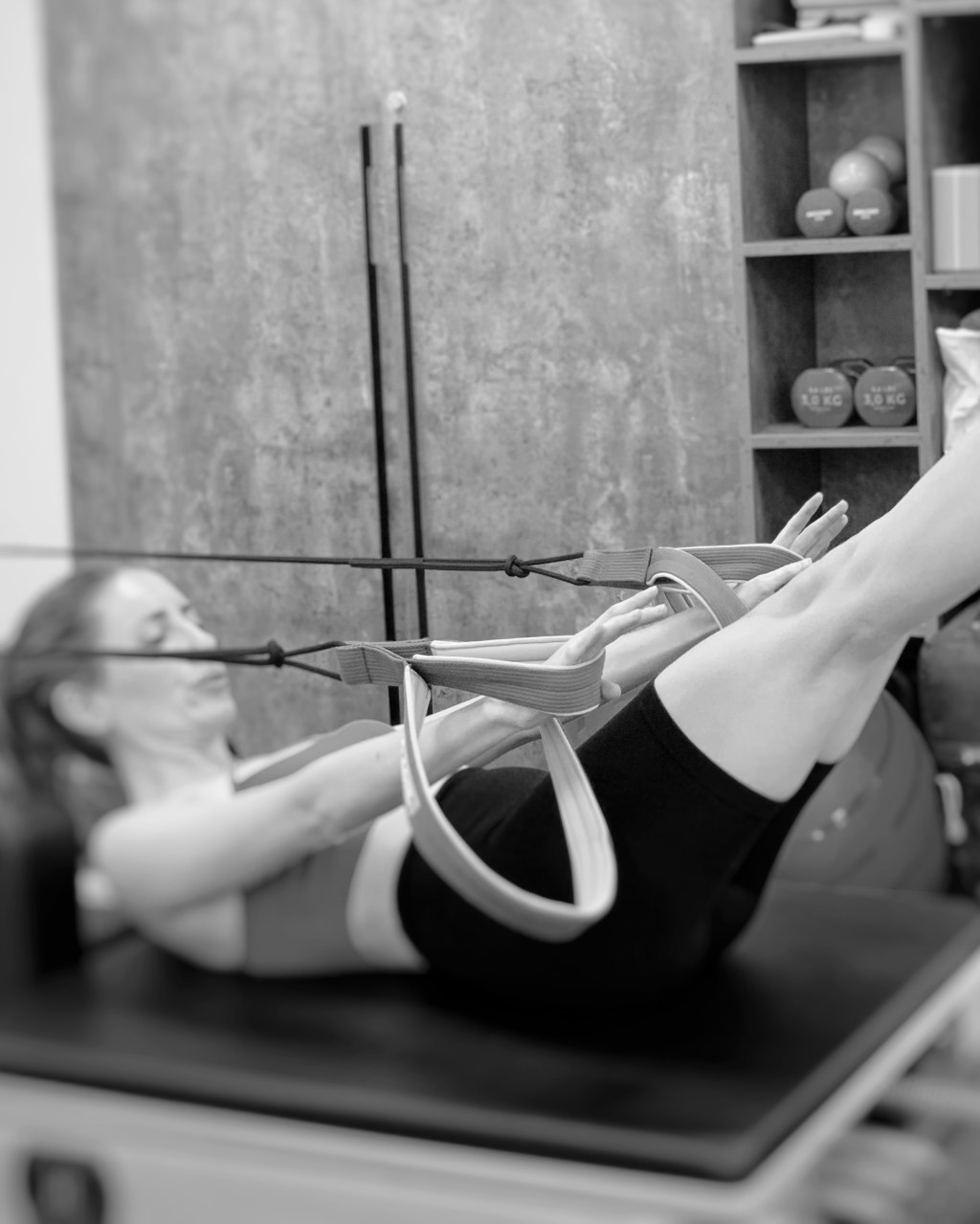
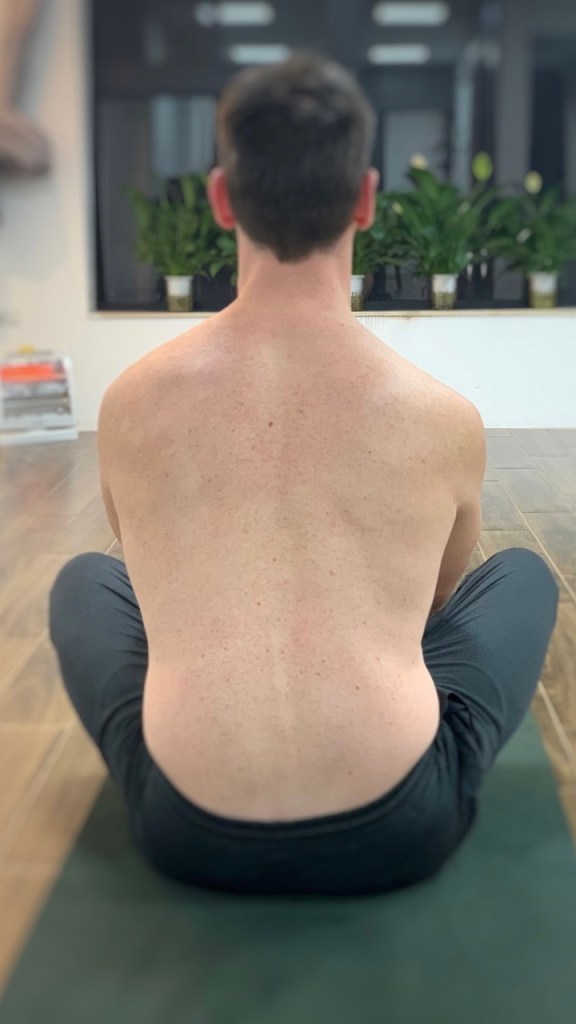
If having all the muscles, and training all the time, doing sport, Crossfit would spare us from having neck, back issues and no injuries, then everyone would go out there and do unsupervised training. At least, that is not the case here. A male over 35, training regularly, always active. Having so much lower back pain all the time, disc herniation, he was very well aware of his posture prior to the assessment. He has been to doctors, physios and others. After the assessment, we found many issues, from pelvis position, shoulder, flat feet, deviated spine, alignment issues etc… All of that, plus the deadlift that he does, adds tremendous pressure to his spine.
There isn’t a shortcut. With that many issues, I expected to have at least 8–10 sessions done to improve his whole body condition. We didn’t have that chance to work together afterwards, but I believe by taking the right actions and the right movement, the body will heal itself – right movement is medicine.
Prognoses of movement dysfunctions can be formulated, interventions can be planned,
and progress can be evaluated. But human movement is often
quite complex, frequently being influenced by a dizzying
interplay of environmental, psychologic, physiologic, and
mechanical factors. Most often, analyzing complex movements is simplified by starting with a basic evaluation of forces
acting from within and outside of the body, and studying the
effects of these forces on hypothetically rigid body segments.
 Mulberry Whale
Leave a comment